
Noorani Qaida With Tajweed: Building the Right Foundation From Day One
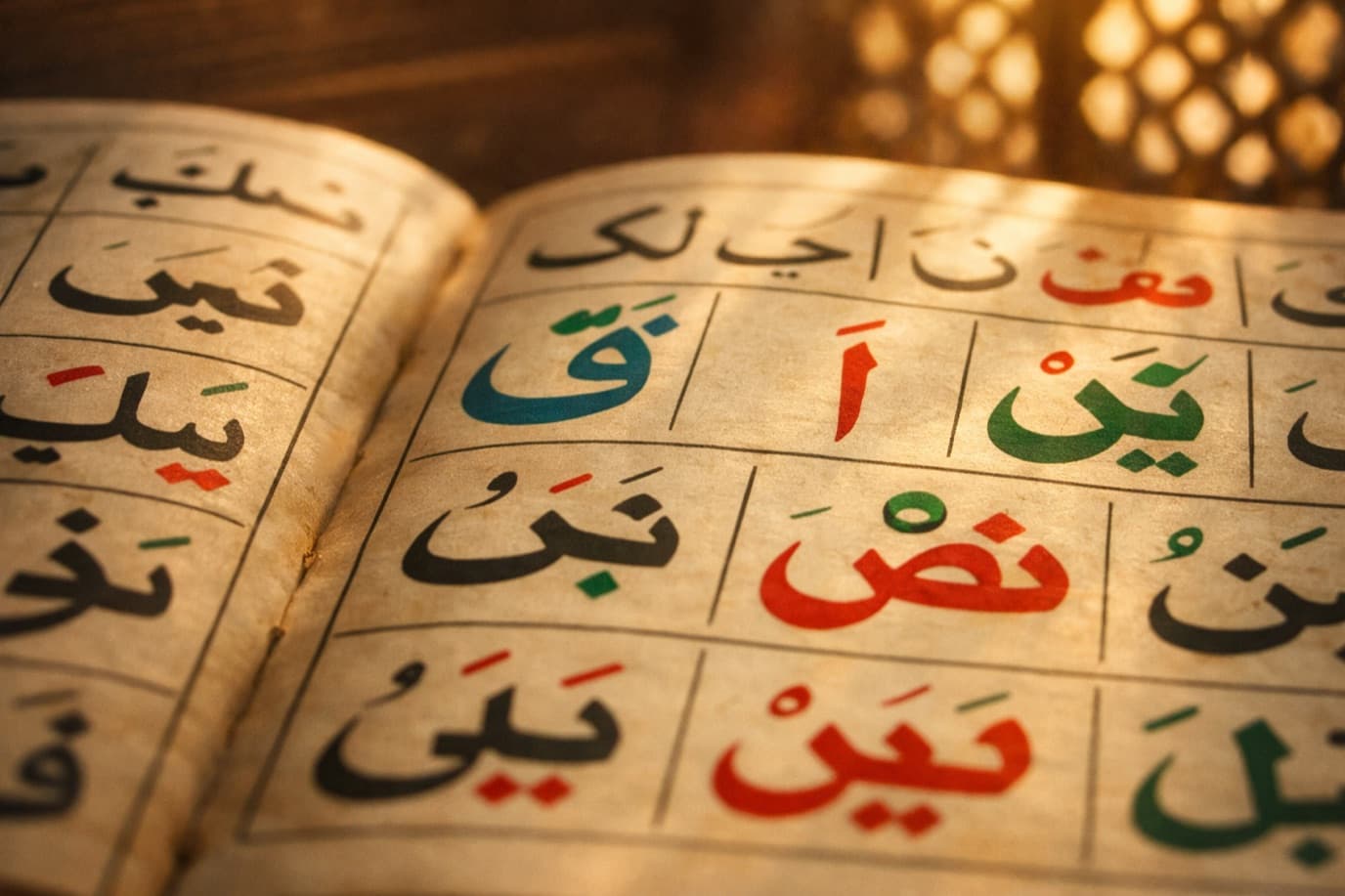
There's a common misconception that Noorani Qaida and tajweed are two separate stages — first you learn to read with the Qaida, then, much later, you add tajweed. In reality, a well-taught Qaida builds tajweed in from the very first letter. This guide explains how the two fit together, why learning them together saves you from re-learning later, and what "Noorani Qaida with tajweed" actually means in practice.
Qaida and tajweed aren't separate — they're the same journey
Noorani Qaida is the primer that teaches you to read Arabic. Tajweed is the science of pronouncing it correctly. The Qaida is designed to introduce tajweed gradually, so that from your very first letter you're producing sounds correctly — not learning to read wrong and fixing it later.
Think of it this way: it's far easier to learn a sound correctly the first time than to unlearn a habit after years. A child or adult who does the Qaida with proper tajweed never has to go back.
"And recite the Qur'an with measured recitation." — Surah Al-Muzzammil, 73:4
How tajweed is built into the Qaida
As you progress through Noorani Qaida, tajweed appears naturally at each stage:
Makharij — from the very first page
The Qaida begins with the individual letters and their points of articulation — where each sound is produced in the mouth and throat. This is the first and most fundamental rule of tajweed. Getting the ع, ح, ق, and the similar-sounding letters right here is tajweed in action.
Letter characteristics (Sifaat)
As letters are drilled, their qualities — heavy and light, whispered and voiced — are shaped. This trains the ear before any rule is named.
The vowels and Madd
When the Qaida introduces long vowels, it's teaching the foundation of Madd (elongation) — holding a sound for the correct count. Rushing here is one of the most common reading faults; the Qaida heads it off early.
Noon Saakin, Tanween, and stopping
The later pages introduce the rules of Noon Saakin and Tanween (Ikhfa, Idgham, Iqlab, Izhar) and how to stop correctly — the same rules covered in full in our guide to tajweed rules for beginners.
By the final pages, the student isn't just reading letters — they're reading Quran with the beginnings of correct recitation already in place.
Why this matters so much
- No bad habits to undo. Learning the sounds correctly the first time is dramatically faster than correcting them years later.
- A smoother path to full tajweed. After a Qaida taught with tajweed, the full tajweed course is refinement, not repair.
- Confidence. Reading correctly from the start makes learners — children and adults alike — enjoy the process.
The catch: it depends entirely on the teacher
Here is the honest part. A Qaida is only as good as the ear teaching it. Tajweed is a spoken science — you cannot learn correct makharij from a book or app that can't hear you. The whole benefit of "Noorani Qaida with tajweed" depends on a qualified teacher listening in real time and correcting each sound before it becomes a habit.
That's why our 1-on-1 Noorani Qaida course is taught by teachers with strong tajweed, who build correct pronunciation in from page one — then take students straight into fluent Quran reading. Whether it's a child starting out (see how to teach Noorani Qaida to a child) or an adult refining their reading, the principle is the same.
Start on the right foundation. Book 2 free classes and hear your teacher shape each sound correctly from the very first letter. No card required.
The bottom line
Noorani Qaida and tajweed aren't a "later" pairing — a good Qaida teaches tajweed from the first page, so you read correctly from the start and never have to undo bad habits. Learn them together, with a teacher who can hear you, and the rest of your Quran journey is built on solid ground.
About the author
Muhammad Waqas is a Hafiz of the Quran and a senior instructor specializing in tajweed, hifz, translation, and Islamic studies. He teaches 1-on-1 online with Quran Interactive in English, Urdu, and Arabic.
→ View profile · Book a trial with Muhammad Waqas
Ready to start?