
Islamic Studies for Kids: What Your Child Should Learn (and When)
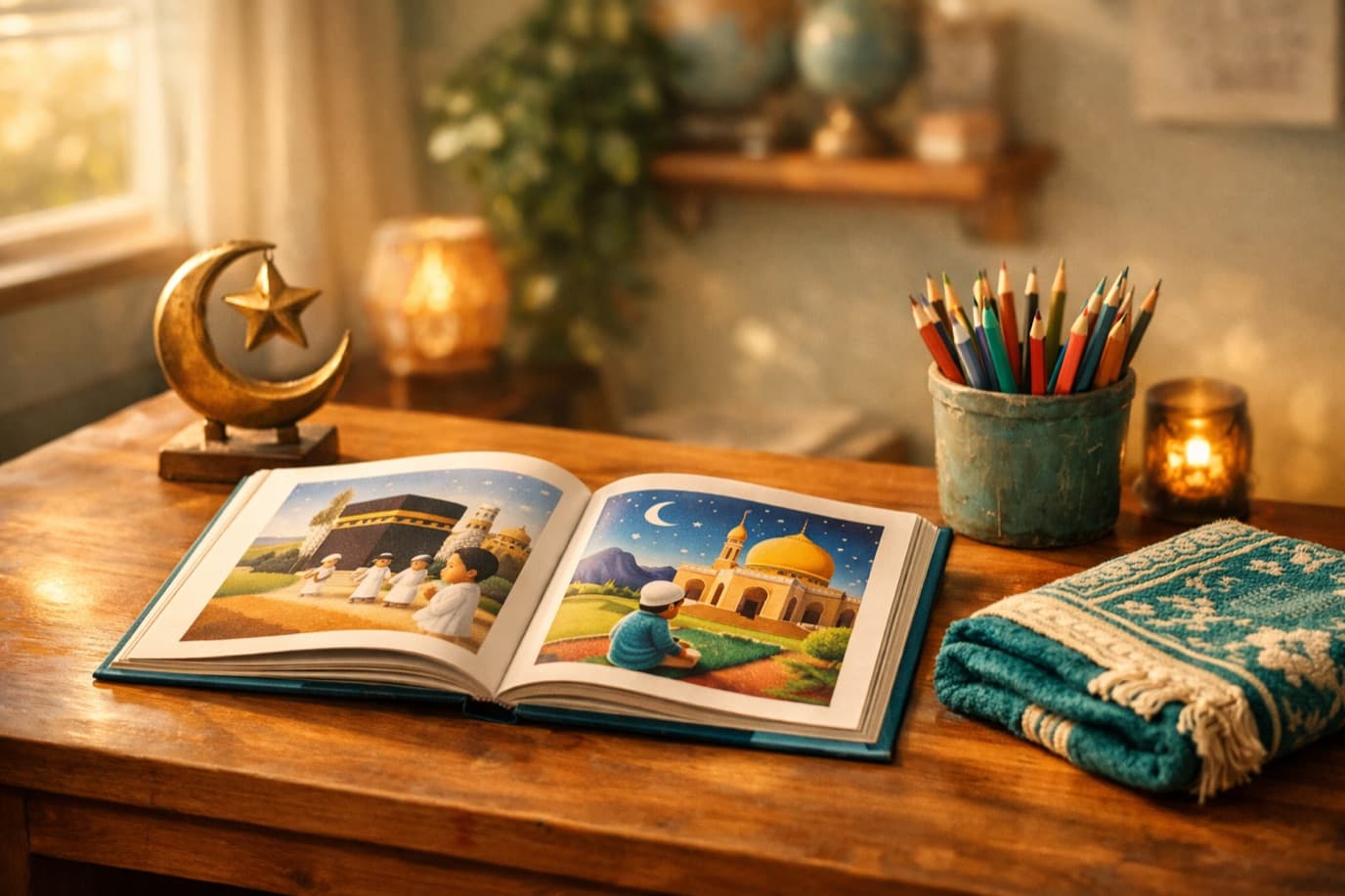
Learning to read the Quran is the foundation — but many parents also want their child to understand their faith: who Allah is, why we pray, the story of the Prophet ﷺ, and how a Muslim behaves. That's Islamic studies. This guide gives you a clear roadmap of what a child should learn, roughly in what order, and how it fits alongside Quran reading.
Islamic studies alongside the Quran
Islamic studies works best beside Quran learning, not instead of it. A child ideally learns to read the Quran (starting with Noorani Qaida) while also, in age-appropriate steps, learning the core of their faith. The two reinforce each other — reading gives access to the words, Islamic studies gives them meaning.
"O my son, establish prayer, enjoin what is right, forbid what is wrong, and be patient over what befalls you." — Surah Luqman, 31:17
Luqman's advice to his son is the Quran's own model of teaching a child faith gently and practically.
The core topics, roughly in order
1. Iman & Aqeedah (belief) — the foundation
Start simple: who Allah is, that He is One, the love and awe we have for Him, the angels, the Prophets, and the Last Day — taught at a child's level. This is the bedrock everything else rests on.
2. Ibadah (worship) — how we practise
The Five Pillars, and especially how to pray — wudu, the movements, and the short surahs and duas of Salah. This is where Quran reading and Islamic studies meet most directly.
3. Everyday duas & adhkar
The small supplications that fill a Muslim child's day — before eating, before sleeping, entering and leaving the home. Short, memorable, and immediately usable.
4. Seerah & stories of the Prophets
The life of the Prophet Muhammad ﷺ and stories of earlier Prophets. Children learn faith beautifully through story — courage, honesty, mercy, and trust in Allah.
5. Akhlaq (manners & character)
Honesty, kindness, respect for parents, patience. For young children, character is the real curriculum — and it's caught as much as taught.
Keeping it joyful, not heavy
- Little and often. Short, regular lessons hold a child far better than long ones.
- Story first. Lead with the narrative, then draw out the lesson.
- Connect to their life. A dua they can use today means more than an abstract rule.
- Model it. Children absorb the manners they see at home.
For more on teaching young children specifically, our guide to teaching the Quran to your 6-year-old applies just as well to Islamic studies.
How structured lessons help
A qualified teacher brings order and accuracy to all of this — teaching aqeedah soundly, correcting how your child prays, and pacing topics to your child's age. Our 1-on-1 Islamic studies course covers belief, worship, duas, seerah, and manners alongside Quran reading, taught by patient teachers experienced with children. Many parents choose a female teacher for these lessons.
Give your child the meaning behind the words. Book 2 free classes with a qualified teacher — no card, no commitment.
The bottom line
Islamic studies for kids follows a natural order: belief, then worship and prayer, then daily duas, then the Prophet's story, all wrapped in good character — taught gently, little and often, alongside learning to read the Quran. Start simple, keep it joyful, and let understanding grow with your child.
About the author
Hafiza Saba Waqas has memorized the entire Quran and specializes in teaching tajweed, Quran reading, and Islamic studies to children. She teaches 1-on-1 online with Quran Interactive in English, Urdu, and Arabic.
→ View profile · Book a trial with Hafiza Saba
Ready to start?