
Learn Arabic to Read the Quran: A Beginner's Roadmap
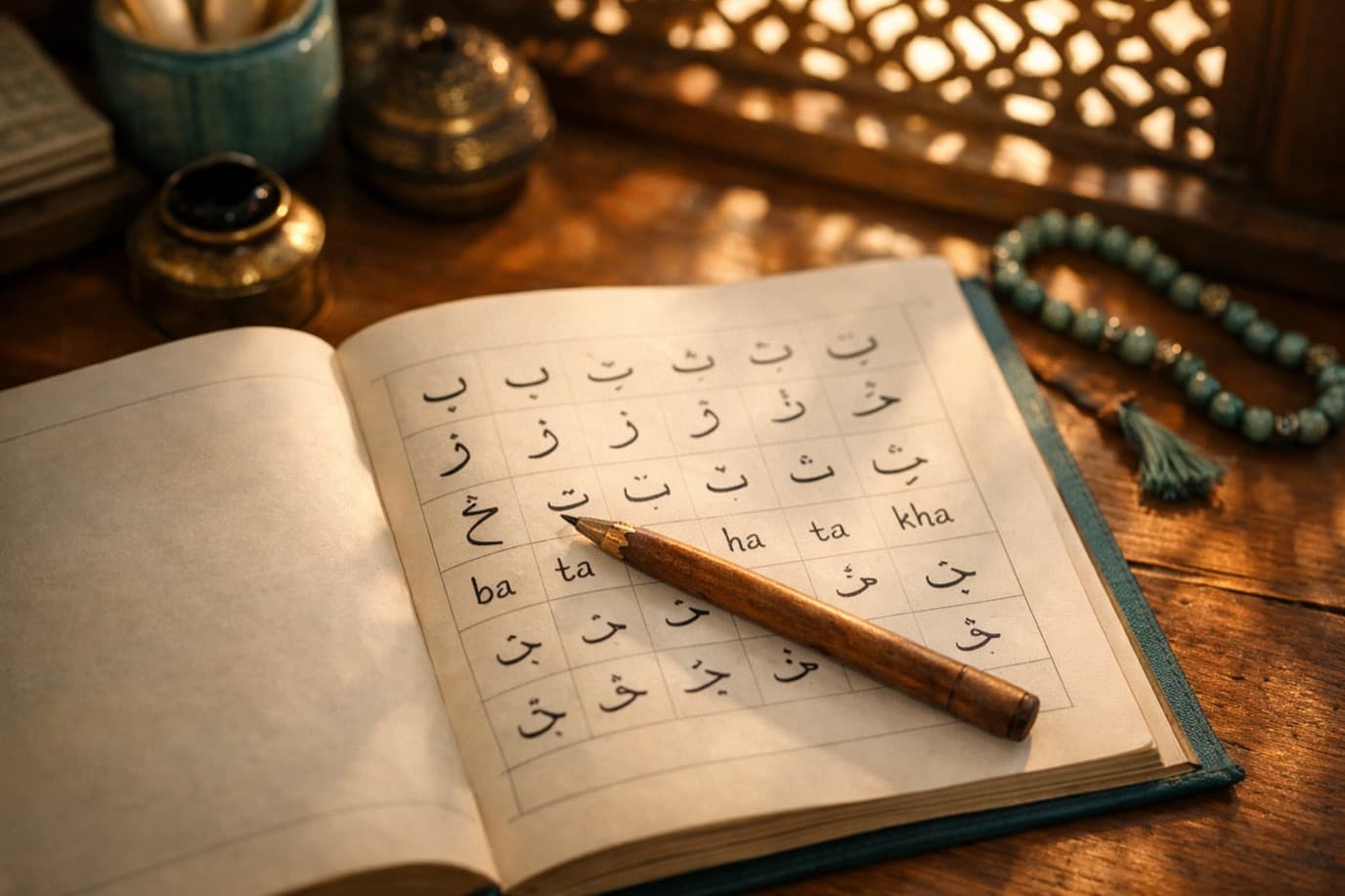
"Do I need to learn Arabic to read the Quran?" It's one of the first questions new learners ask, and the answer has two layers. To read and recite the Quran, you need to learn the Arabic script and its sounds — not the whole language. To understand it directly, you go a step further. This roadmap lays out the stages clearly so you know exactly how much Arabic you need for your goal, and in what order to learn it.
Reading vs. understanding: two different goals
- Goal A — Recite the Quran correctly. You need the Arabic script, its sounds, and the rules of pronunciation. You do not need to speak conversational Arabic or study grammar. Most people start here, and it's enough to read the entire Quran in your prayers.
- Goal B — Understand the Quran directly. Now you add vocabulary and Quranic grammar, so the words carry meaning as you read them.
Knowing which goal you're aiming for saves you months of studying the wrong thing. If you're unsure whether to learn Quranic or Modern Standard Arabic, our guide Modern Standard vs Quranic Arabic settles that choice.
"Indeed, We have sent it down as an Arabic Qur'an that you might understand." — Surah Yusuf, 12:2
The roadmap to reading the Quran
Stage 1 — The Arabic alphabet and sounds
Start with the 29 letters and, crucially, their correct pronunciation (makharij — where each sound is produced in the mouth and throat). Arabic has sounds English doesn't, so this stage is about training your ear and tongue, not just recognizing shapes.
Stage 2 — Joining letters and vowels
Learn how letters change shape when connected, then add the short vowels, Tanween, and long vowels. This is the point where letters become readable syllables. This entire foundation is what Noorani Qaida teaches — the primer used by children and adults alike. If you're an adult, Noorani Qaida for adults shows how to work through it on a busy schedule.
Stage 3 — Fluent reading with tajweed
Once you can sound out words, you build fluency and apply the rules of tajweed so your recitation is correct and beautiful. At the end of this stage you can open any page of the Quran and read it.
For most people, Stages 1–3 are the whole journey — and they're covered by the Quran reading course.
The roadmap to understanding the Quran
If you want to move from reading to comprehending, you continue:
Stage 4 — Core Quranic vocabulary
A surprisingly small set of words makes up a huge portion of the Quran. Learning the most frequent vocabulary means you start recognizing meaning quickly.
Stage 5 — Quranic grammar (Nahw & Sarf)
Basic grammar reveals how words relate — who is doing what to whom, tenses, and structure. You don't need to become a linguist; a working foundation transforms your reading.
Our Quranic Arabic course and Quran translation course are built for exactly this stage — moving you from reading the words to understanding them.
How much Arabic do you really need?
Honestly? Less than most people fear.
- To recite in prayer and read the whole Quran: the script, sounds, and tajweed. Achievable for a committed adult in a matter of months.
- To follow the meaning as you read: add high-frequency vocabulary and basic grammar over a longer, rewarding journey.
You do not need to master formal spoken Arabic to have a deep relationship with the Quran.
Not sure where you fall on the roadmap? Book 2 free classes and a qualified teacher will assess your level and point you to the right starting stage. No card required.
The bottom line
Learning Arabic to read the Quran is a staged, achievable path: script and sounds first, fluent reading with tajweed next, and — if you want it — vocabulary and grammar to unlock meaning. Pick your goal, start at Stage 1, and take it one stage at a time.
About the author
Hafiza Ruqaiya has memorized the entire Quran and specializes in tajweed, translation, and Arabic. She teaches 1-on-1 online with Quran Interactive in English, Urdu, and Arabic, guiding learners from the alphabet through to understanding the meaning of the Quran.
→ View profile · Book a trial with Hafiza Ruqaiya
Ready to start?